

Why Generic Software Suddenly Feels Too... Generic
For decades, software was built around the average user. AI makes it possible to build software around just one — you.

Last month, I found myself doing what every creative professional secretly dreads — explaining to a client why something they had already paid for would now cost them more money.
What I’d built for them was Huddlebud, a bespoke event intelligence platform designed around that client’s very narrow requirements. Their brief was detailed, particular, and full of challenges that no single existing “meeting intelligence” tool could solve. That was a year ago. In AI time, a year is a lifetime — and the models, APIs, and workflows the original build relied on had moved on considerably.
Huddlebud was designed around one core friction the client faced. At corporate events with multiple speaker sessions and audience interactions, the team had no simple way to record, transcribe, analyse, and discuss insights from the entire event.
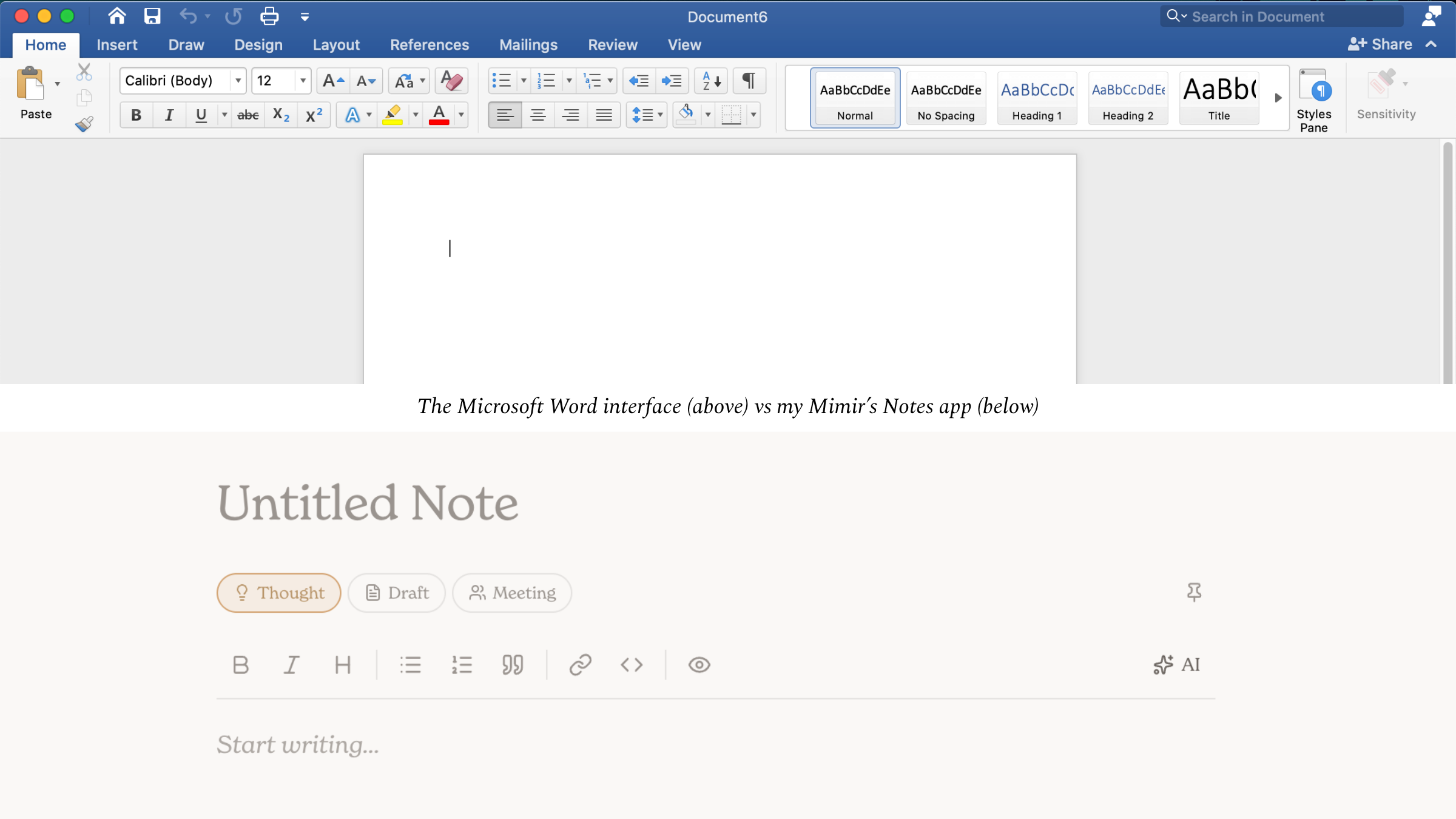
The way I explained it to him was this. He uses Microsoft Word, like millions of people on the planet. But most Word users use a tiny fraction of its features. Now, imagine you could sit down with Satya Nadella himself, tell him exactly what you needed from your word processor, and he would build you a version of Word that fulfils those exact needs. No more. No less. That’s the premium they were paying me for, with Huddlebud.
For the last few decades, we’ve been building software for the “average” user. But that means covering the spectrum — from a user who barely opens the app to the “power user” who inexplicably figures out how to run Doom inside the app.
The software needs to support that entire spectrum to be considered viable and usable. It doesn’t matter that most people sit closer to one end of that spectrum and use only a fraction of Microsoft Word’s features. The power-user base, especially inside large organisations, is enough to justify keeping those extra features in.
Microsoft is never releasing a “stripped-down” version of Word for the person who just wants basic text formatting, styling, an uncluttered writing space, and maybe a couple of AI features. It just wouldn’t make business sense for them.
As users, we accepted this bloat as necessary. An eyesore at the very least, and, at most, a grudging compromise that allows us to do what we need to. A few weeks into using Word, you don’t notice what feels like 128 icons and menu items surrounding that blank page. And even if I pointed them out to you, you’d just shrug your shoulders and say, “Well, what ya gonna do?”
I had a hard time accepting that. So when I needed a writing app with a very small, tailored set of functions, I just built it myself. It now lives as my Notes mini-app in Mimir. And it’s perfect. For me.
Because when you’re building for everyone, adding features is a necessity. When you build for yourself, removing features becomes a luxury.
“Traditional” software companies are motivated by scale — how quickly can we reach a million active users? We celebrate companies that hit that milestone in three months and call them a huge success.
SaaS gives everyone the same tool and asks them to shape their behaviour around it. The tools of the future can start with behaviour and shape the software around that.
Of course, some SaaS products are probably not going away for a while. Payroll, accounting, cloud storage... most people don’t need bespoke solutions to those right now. But for a lot of other software we use, the speed and customisation we now have access to is shifting the landscape very quickly. I know it because I’ve made the shift, in many ways, in my own life and work.
I’ve recently been speaking to another client about building an organisational intelligence layer for their team. They tried Notion and found it unnecessarily complicated and difficult to onboard. Their challenges are familiar. They’re the ordinary organisational messes every growing team recognises. It’s documents scattered across four different cloud storage solutions, half-remembered project histories, manual reporting, knowledge trapped in people’s heads, and no way to easily surface relevant info about their clients when they need it. The solutions they’ve tried so far, like Notion, somehow manage to make that mess feel even heavier.
The most interesting solutions today don’t start with the question, “Which tool should we onboard?” They start with a friction. “Here’s this annoying, particular, recurring thing that we do that wastes our time.” Only then do we build around it.
For the first time, we actually have an alternative. Easier, bespoke solutions to your individual frictions are now possible. Sometimes that solution might be a new app or product. Other times, it could be a well-structured Claude Project, a folder in Claude Cowork, or even a Google Apps Script that runs once a day on your behalf.
I’m not advocating for everyone to build their own Microsoft Word. In fact, definitely don’t start there. Start with the smallest, most specific friction you can identify.
I don’t want to onboard yet another tool.
I want the tools to onboard me.
Fascinating insight.
Thanks for this. I have been here, not recently, but a decade ago. Instead of using bloated apps, we went and built a small, bespoke, ready-to-use app that served most of the purposes. How do you tackle the ask for more features and scale when it costs much, much more than out-of-the-box solutions?